Women and the Congregation in India
The attitude expressed towards women in the Hebrew communities is similar to the way in which women are treated in our country. There are few outstanding women who are accepted as leaders in our nation, but the majority of women are discriminated against and treated as objects without privileges in society.
Social evils such as Sati, dowry, taboos and laws of "clean" and "unclean" have placed women at a disadvantage in relation to men. The Gospel has brought dignity and liberation to women who have suffered centuries of discrimination and oppression.
There is neither Jew nor Greek, slave nor free, male nor female, for you are all one in Christ Jesus.
Galatians 3:28Biblical Background
The Bible begins with the story of creation. According to Genesis 1:27, God created both male and female in His own image. Yet throughout history, women have often been given secondary roles within many communities.
Jesus accepted the ministry of women who followed Him — He spoke with the Samaritan woman, who became the first to proclaim Him as the Messiah in her village, and Mary Magdalene became the first witness of the risen Christ.
Scripture records many women who demonstrated remarkable leadership during times of crisis. St. Paul acknowledged many women as fellow workers in ministry.
Throughout missionary history, women served as teachers, doctors, nurses, evangelists, craft workers and technical instructors, enabling many Indian women to receive education and leadership opportunities.
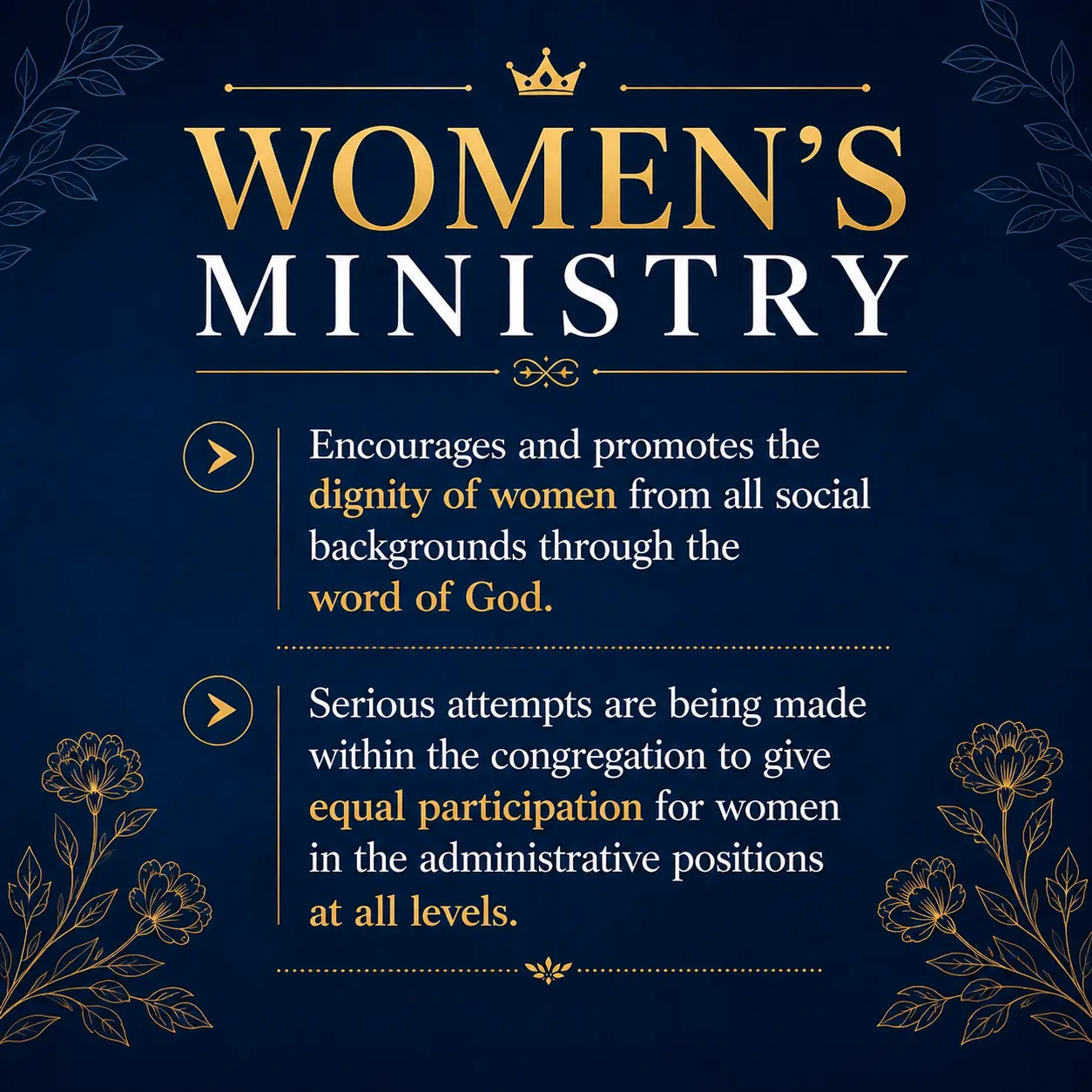
Today, churches continue striving to provide equal opportunities for women in ministry and leadership while standing against discrimination and oppression.
Call to Young People Today
Towards Transformation of the Relationship Between Women and Men
- I Ensure equal participation at every level of church life.
- II Form women's fellowships that actively protect and promote women's rights.
- III Encourage women's fellowships to support children's Christian nurture.
- IV Help girls who discontinue school or college education.
Building Stronger Communities
Vocational Guidance
Women's fellowships can arrange vocational guidance and assist young people in career placement.
Protect Women's Rights
Address dowry and oppression through community awareness, counselling and appropriate disciplinary measures.
Family Development
Provide training in family health, parenting and support for unemployed or under-employed families.
Income Generation
Organize cooperative programmes that help families create additional sources of income.